
 English
 日本語
日本語 한국어
한국어 Deutsch
 中文简体
中文简体Is Air Pressure the Missing Layer in Foot Massage
Foot massage devices often rely on rollers, vibration, heat, or textured surfaces to create physical stimulation. Air pressure introduces a different mechanism. Rather than pushing against the sole from a fixed mechanical point, inflatable chambers expand and contract around the foot. This rhythmic squeezing gives an Electronic Air Pressure Foot Massager a distinctly different operating principle from traditional roller-based machines.
How Does Air Compression Change the Sensation?
Air compression works through controlled inflation and deflation. Internal airbags expand around selected areas of the foot, hold pressure briefly, then release before repeating the cycle. Such movement can create a wrapping sensation instead of concentrated contact.
- Gentle enclosure: Inflatable chambers can surround the sides and upper portion of the foot rather than touching only the sole.
- Rhythmic pressure: Repeated inflation and release creates a pulsating massage pattern.
- Adjustable intensity: Different pressure levels allow users to change the firmness of each compression cycle.
FDA documentation for powered inflatable massagers describes this operating principle as inflatable pressure cuffs that simulate kneading and stroking through controlled pressure. Some devices use sequential compression across two or more chambers.

Why Do Multiple Air Chambers Matter?
Airbag quantity and arrangement can significantly affect the massage pattern. Two chambers may provide a relatively simple compression sequence, while three or more independent chambers can divide the foot and lower leg into separate pressure zones.
- Heel zone: Provides pressure around the rear section of the foot.
- Mid-foot zone: Adds compression around the central area.
- Forefoot zone: Extends the pressure pattern toward the toes and front of the foot.
- Calf zone: Foot-and-calf models can extend compression upward through additional air chambers.
Some current designs use independent air channels so foot, calf, and thigh sections can operate separately or together. One manufacturer, for example, lists three massage modes and three intensity levels with 3+3 larger airbags covering the lower body.
How Strong Should Air Pressure Feel?
Pressure specifications vary considerably between products. This makes intensity adjustment more useful than simply advertising a high pressure value. Different users may prefer a lighter compression cycle or a firmer squeezing sensation.
Current products demonstrate this range clearly. Vive Health lists three pressure settings of 135, 157.5, and 202.5 mmHg, while another air compression system specifies low, medium, and high settings around 23, 27, and 31 kPa.
- Low pressure: Suitable for users who prefer a lighter squeezing sensation.
- Medium pressure: Creates a more noticeable compression cycle without requiring the strongest setting.
- High pressure: Produces a firmer wrap and stronger compression sensation.
Can Air Pressure Work Without Rollers?
Yes. Air compression does not require rotating mechanical rollers to create a massage effect. Vive Health, for example, states that its compression foot and calf model uses air compression and optional heat without rollers.
This distinction matters because rollers and airbags interact with the foot differently. Rollers create localized mechanical movement, while airbags surround and compress larger sections. Products combining both technologies can therefore offer two separate forms of physical stimulation within the same device.
What Other Features Shape the Experience?
Air pressure is only part of the product design. Several supporting features can determine how practical and comfortable an Electronic Air Pressure Foot Massager feels during regular use.
- Adjustable wrap: Hook-and-loop straps or flexible cuffs help accommodate different foot and calf sizes.
- Heating: Some models combine compression with selectable heat settings.
- Massage modes: Sequential or alternating air cycles can change the rhythm of compression.
- Session timer: Automatic shut-off periods commonly range around 15–25 minutes on consumer models.
- Coverage area: Foot-only designs differ from products extending through the ankle, calf, or thigh.
Current products show considerable variation. Pyle lists three intensity levels, six relaxation modes, adjustable wrap sizing, and 15-, 20-, and 25-minute timer options.
Is Air Pressure the Missing Layer?
Air compression adds something that rollers and vibration cannot reproduce in exactly the same way: a surrounding, rhythmic squeeze. The combination of controlled inflation, deflation, adjustable pressure, and multi-zone airbags allows an Electronic Air Pressure Foot Massager to create a more enclosed massage sensation.
That difference makes air pressure particularly interesting within multifunctional foot massage equipment. Buyers comparing products can look beyond the number of massage modes and examine air chamber design, pressure range, compression sequence, adjustable fit, coverage area, heating options, and timer settings. These technical details provide a clearer picture of how the machine will actually feel during use.
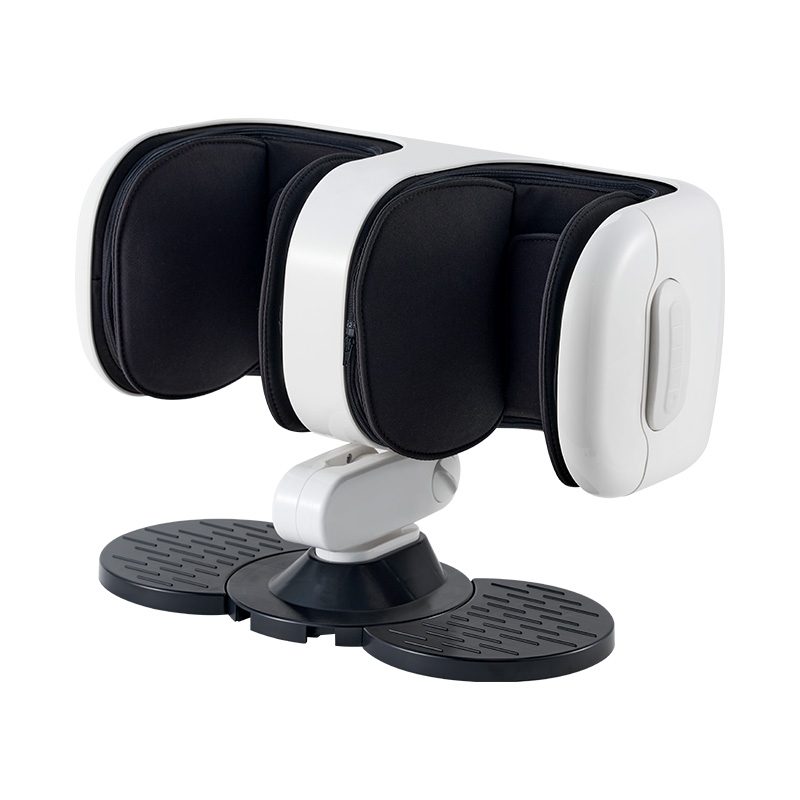
- RF-688 Detachable Lightweight Leg & Foot Massager
- RF-597 Deep Kneading Shiatsu Foot Massager with Heat
- RF-671 Full Wrapped Heat Shiatsu Foot Massager
- RF-697 Shiatsu Foot Massager with Heat and Deep Kneading
- RF-7900 Electric Air Pressure Foot and Calf Massager Machine
- RF-650 Electric Shiatsu Heating Foot Massager Machine
- RF-8200 Electric Leg and Foot Massager Machine
- RF-8700 Foot and Calf Massager For Relaxation And Stress Relief
Copyright © Zhejiang Rifeng Electrical Appliance Co., Ltd.
Foot Massager Factory
